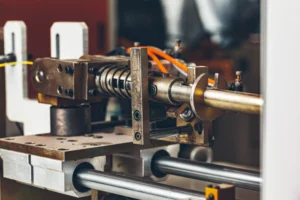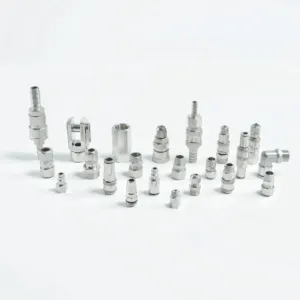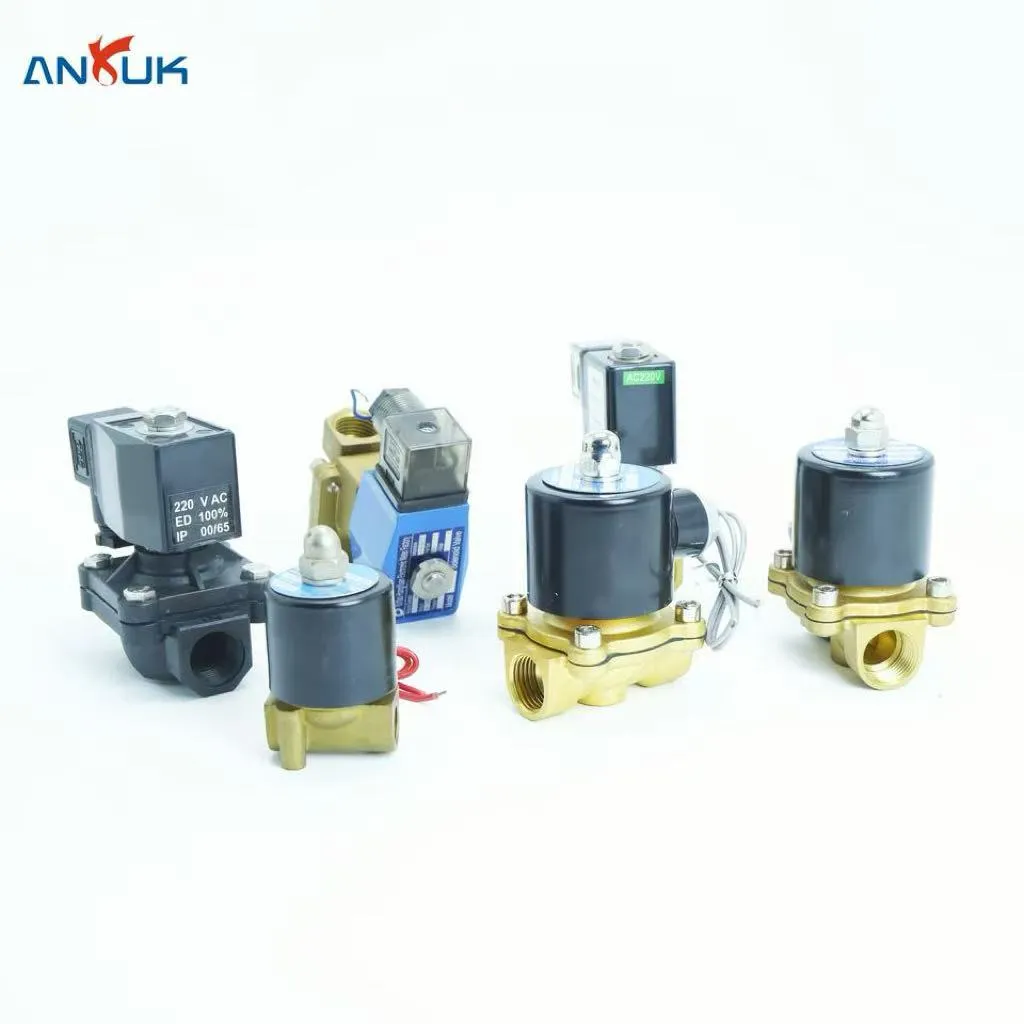
Achieving adequate air control in a pneumatic system requires the investment of a dedicated control valve – to regulate the flow rate, pressure and direction of the gas medium. For example, pneumatic directional valves are designed for such demanding applications and are suitable for industrial automation systems, HVAC devices, mobile and fixed machinery, chemical processing plants, automotive air brake systems, medical equipment and aircraft landing gear and other aircraft drive systems.
Why is it necessary to understand the working principle of pneumatic control valves and how to use pneumatic solenoid valves to optimize the performance of airflow systems in different industries?
This paper discusses the pneumatic solenoid valve in detail. It describes the working principle of the pneumatic directional valve, three types on the market and their advantages. Finally, you ‘ll get all the necessary information to make a balanced and wise decision when selecting valves for a variety of airflow applications.
How does A Pneumatic Solenoid Valves Work?
The basic solenoid valve consists of several components : coil clamp, magnetic coil, magnetic core (magnetic source), iron core tube, hood, sealing ring, washer, diaphragm and valve body. As you can see, this is a complex and tiny device.
The valve obtains energy from the core and coil of the electromagnet. Inside the solenoid valve, the magnet generates a magnetic field between the positive and negative poles, and the piston moves due to the repulsion of any pole. This movement enables the valve to open and close, thus affecting the seal in a variety of ways. The valve can also be kept open or closed without electricity, which does save energy costs.
If a valve has multiple ports, the movement occurs when the port is opened and connected.
The electromagnetic force and repulsive force of the direct solenoid valve are directly switched. In the pilot valve, the solenoid valve guides the piston to open a small hole, and the pressure allows the valve to open. Both require a stable energy source, otherwise the solenoid valve will be closed.
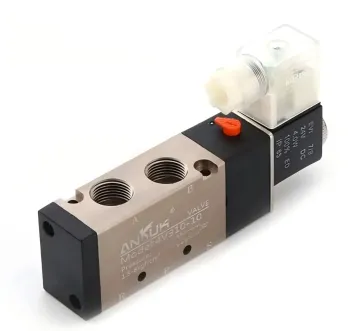
The following is the detailed workflow of the Normally Closed (NC) direct-acting solenoid valve:
Rest Position:
When the coil is not energized, the reset spring applies pressure, and the spool is tightly pressed on the valve seat.
At this time, the inlet (P port) is blocked, the compressed air cannot pass through, and the outlet (A port) is usually communicated with the atmosphere through the exhaust port (R port).
Energized:
The current flows through the coil, generating a strong electromagnetic field.
The magnetic force overcomes the resistance of the spring and pulls up the armature.
Switching:
As the armature moves, the spool leaves the valve seat and opens the intake channel.
The compressed air flows from the inlet to the working port (port A) to drive the cylinder action. At the same time, the exhaust port is closed.
De-energized:
Cut off the power, the magnetic field disappears instantly.
The spring force regains the dominant position, pushes the spool back to the original position, cuts off the airflow, and the system returns to the initial state.
Anruk technical tips: For Normally Open (NO) valves, the above logic is just the opposite – the valve is open when the power is turned off, and the valve will be closed after power is turned on.
Pneumatic Solenoid Valve Types
| Table of Pneumatic Solenoid Valve Types | |
|---|---|
| Type | Features |
| Direct Acting | Simple structure, easy maintenance. |
| It can be started under zero pressure difference (vacuum), and there is no requirement for the minimum working pressure. | |
| Fast response speed. | |
| Pilot Operated | Low power consumption, electromagnetic head small size. |
| Large diameter and large flow control can be achieved. | |
| Low control power, low coil heating. | |
| Forced Pilot | Under zero pressure difference or low pressure difference, it can also operate reliably (wider range). |
| Compared with the pure direct-acting, the power and volume are more optimized. | |
| Wide range of application. |
The direct-acting pneumatic solenoid valve directly pulls the spool only by electromagnetic force that is suitable for small-caliber piping, vacuum applications and low flow control.
The pilot-operated pneumatic solenoid valve uses the air pressure difference in the pipeline to push the spool and the electromagnetic force only controls a small pilot hole. It is suitable for use in most industrial automation pipelines and large-diameter gas circuits.
The forced pilot pneumatic solenoid valve combines the mechanical structure of direct action and pilot and has the advantages of both : it can control large flow and work under zero pressure difference. Therefore, it is suitable for complex fluid control systems and pressure instability conditions.
How much voltage does a solenoid need?
The selection of voltage directly affects the safety and stability of the system.
12V Pneumatic Solenoid Valve Safety: Belongs to the safety extra-low voltage (SELV), even if the leakage will not cause electric shock danger to the operator.
Compatibility: Perfectly adapted to modern PLC control system and vehicle system (such as truck pneumatic control).
No buzz: The DC coil runs smoothly and does not produce the common ‘buzz’ noise of the AC coil.
AC Solenoid Valve (AC 220V/110V):
- Advantages: The response speed is usually slightly faster than the same power DC valve.
- Disadvantages: the starting current is large, if the valve core is stuck it can not pull, the coil is easy to burn in a few seconds.
Anruk recommends: If your equipment is used in precision electronics manufacturing or humid environments, we highly recommend the use of a 24V DC or 12V DC system.
What is the common problem of solenoid valves?

Does the solenoid valve not work? Don’t hurry to replace new, 70 % of the problem can be fixed.
Fault 1: no response after energization
Possible causes: Coil burning, poor line contact, voltage mismatch.
Troubleshooting: Use a multimeter to measure whether the voltage reaches the coil; check whether the coil resistance is open.
Fault 2: Air Leakage
Possible reasons: Seal ring wear, impurities in the valve body cushion the valve core.
Troubleshooting: This sound is usually obvious (hissing). Disassemble the valve body to clean impurities, or replace the original sealing kit.
Fault 3: Valve stuck or slow action
Possible reasons: Lubricating oil dried up, too much water in the compressed air lead to rust.
Troubleshooting: Check whether the air source processing element (filter/oil mist) is working properly.
How to test a pneumatic solenoid valve?
1. The Click Test: Power on and off the coil, you should be able to hear the crisp ‘click’ sound. If there is no sound, the armature is not moving.
2. The Magnetic Test: When energized, the screwdriver touches the nut at the top of the coil. If there is obvious magnetic attraction, the coil is energized normally.
3. Multimeter Test: In the power-off state, the multimeter is adjusted to Ohms.
Then measuring coil pins.
Result analysis: If the reading is θ (short circuit) or OL / ∞ (open circuit), the coil is damaged and needs to be replaced.
Also Maybe Like Read:
The Ultimate Guide to Pneumatic Solenoid Valves: Uses, Control, Working Principle
Learn More From ANRUK Pneumatics
Anruk Pneumatics wants to help you learn about flow control and the parts you need for pneumatic solenoid valve repair or maintenance. In addition, we can also recommend affordable models for you to stock the shelves.
Please contact our experts immediately for more information. Our experts are always available to ask you questions about the parts and the best way to use them. We hope to start to help you find the right valve to help you control the pressure.