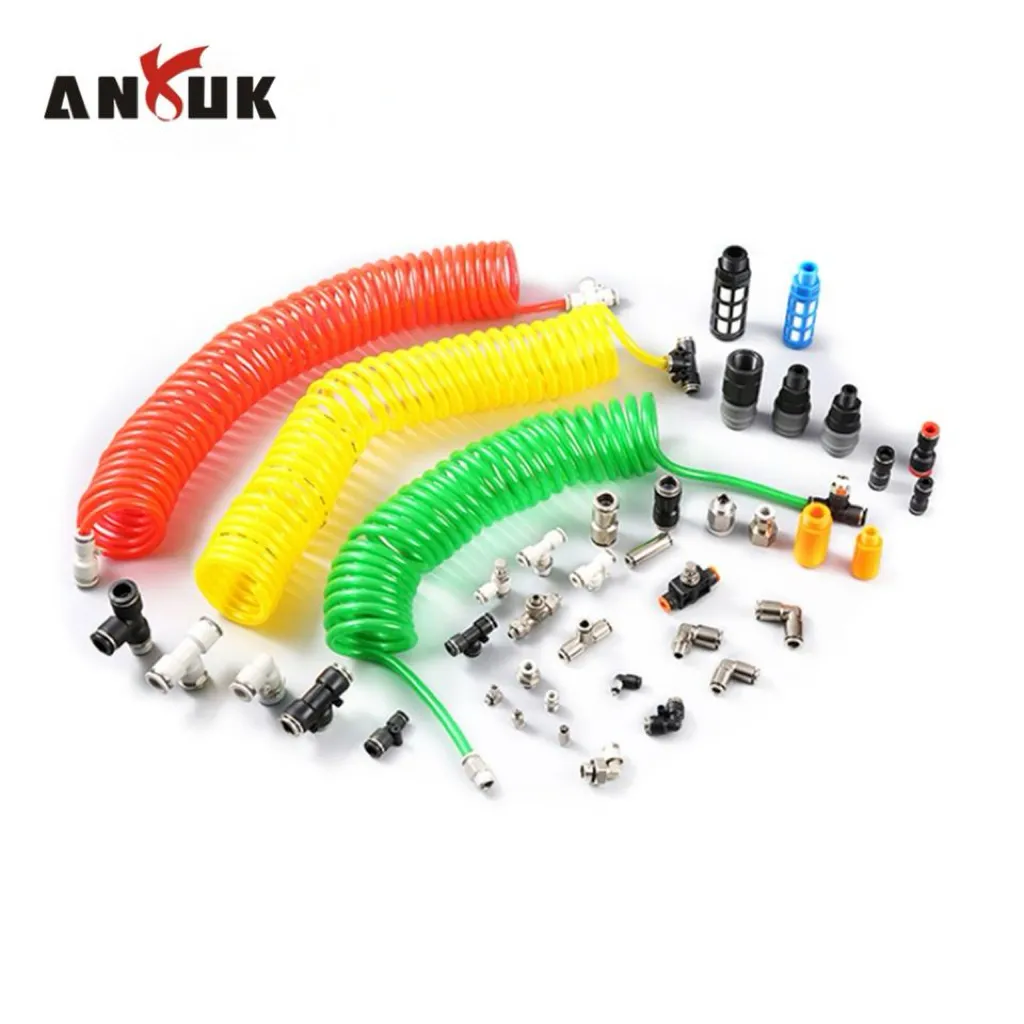
The selection of suitable accessory materials is related to performance and environmental responsibility in the modern fluid control and pneumatic systems. As a leading manufacturer in the industry, Anruk Pneumatic knows the engineering significance behind each fitting.
In this article, we ‘ll explore two of the most common materials- brass and plastic.
Understanding Plastic and Brass Fittings
Although brass fittings have been used for centuries as a reliable solution for piping, heating and ventilation installations due to their strength and durability, plastic fittings are becoming increasingly popular due to their lightweight design, affordability and ease of use.
What are Brass Fittings?

Brass fittings are precision machined connection components made of a metal alloy composed of copper and zinc.
Brass is an extremely versatile material in industrial and civil fields. From brass plumbing fittings for home water supply systems to industrial-grade brass compression fittings that need to withstand high-pressure airflow, brass is highly praised for its ‘forgettable after installation ‘reliability.
In addition, due to its good processing performance, brass fitting hoses can be manufactured into extremely precise threads and shapes to ensure zero-leakage connections in various fluid transports.
What are Plastic Fittings?

Plastic fittings are usually made of thermoplastic polymers, including polypropylene (PP), polyethylene (PE), nylon (Nylon) and polyvinyl chloride (PVC). These fittings are usually mass-produced by injection molding process.
Plastic fittings are popular in low-pressure applications due to their low cost and lightweight characteristics. They are naturally inert to certain chemical substances, which makes them an option in some non-pressurized chemical fluid transport. However, plastics are physically more susceptible to environmental factors (e.g., temperature, ultraviolet light) than metals.
Advantages of Brass Fittings
In order to help you understand the differences between these two materials more intuitively, we have compiled the following comparison tables.
| Key Comparison Table: Brass vs. Plastic Fittings | ||
|---|---|---|
| Features | Brass Fittings | Plastic Fittings |
| Main Components | Copper-zinc alloy (metal) | Synthetic polymers (petroleum derivatives) |
| Durability | Extremely high: impact resistance, not easy to break | Low to medium: easy to aging, brittle, cracking |
| Temp Resistance | Excellent: high temperature resistance, no deformation | Poor: easy to soften or melt at high temperature |
| Pressure Rating | High pressure: suitable for high pressure pneumatic / hydraulic systems | Low pressure: mainly used for low pressure fluid transmission |
| Sustainability | High: 100 % unlimited recovery | Low: difficult to degrade, low recycling rate |
| Application | Brass compression fittings, industrial pneumatic, plumbing system | Irrigation, low-cost drainage, temporary connection |
| Long-term Cost | Initial investment: slightly higher | Initially cheap, but frequent replacements lead to high total costs. |
| Maintenance and replacement costs: low |
As a copper-zinc alloy, brass has been the preferred material in the field of fluid transport for centuries. It features:
- Pretty durability and strength: Brass pipe fittings are known for their high tensile strength and durability. They are not easy to break or deform and can withstand physical impact and mechanical stress to ensure the long-term stability of the system in long-term use.
- Corrosion resistance: Brass plumbing fittingsperform well in humid or chemically aggressive environments. They are effective against corrosion and corrosion due to water quality that make brass a very reliable choice in waterways and pneumatic systems.
- High temperature and high pressure: Brass has good thermal conductivity and temperature resistance. In applications involving high-temperature fluids or high-pressure gases, such as brass compression fittings, you can be confident that they won ‘t soften or fail under extreme conditions like some plastics.
- Versatility: Brass hose fittings provide tight, leakproof sealing and are very easy to process and customize for both industrial machinery and home applications.
Disadvantages of Brass Fittings
Although brass has superior performance, its limitations need to be considered in some specific scenarios :
- High cost: Due to price fluctuations in copper and the value of the raw material itself, the initial procurement cost of brass parts is usually higher than that of plastic parts.
- Large weight: Compared with lightweight plastics, brass has a higher density. This may be a consideration in aviation or some portable device applications that are extremely sensitive to weight.
- Oxidative risk: Although resistant to corrosion, the brass surface may undergo oxidative discoloration over time (although this usually does not affect structural integrity) under specific exposure conditions.
Advantages of Plastic Fittings
With the development of polymer materials science, plastic parts have gradually emerged in many fields. Its main advantages include:
- Cost-effectiveness: The raw materials and manufacturing costs of plastic parts are usually low and it is an affordable choice for low-pressure applications with limited budgets and no need to withstand extreme conditions.
- Excellent chemical resistance: Some specific high-performance plastics are extremely inert to acids, alkalis and other corrosive chemicals, which is sometimes superior to metals when dealing with special chemical fluids.
- Lightweight: Plastic is extremely light, which reduces transportation costs and is easy to install on devices that require frequent movement.
Disadvantages of Plastic Fittings
However, plastics have obvious shortcomings in durability and scope of application, which directly affects their long-term value:
- Short life: Plastics are susceptible to ultraviolet (UV) degradation and become brittle and cracked over time. In an outdoor or strong light environment, its service life is much lower than that of brass.
- Poor temperature and pressure resistance: Most plastic parts are prone to creep or burst under high temperature or high pressure fluctuations, which limits their application in industrial-grade pneumatic systems.
- Installation risk: Plastic fitting is easy to slide or break when over-tightening, and the installation fault tolerance rate is low.
The Importance of Sustainability in Manufacturing

As the sustainability of manufacturing becomes increasingly important, industries are also evolving and becoming more aware of their responsibility to choose environmentally friendly practices. In order to maintain the sustainability of manufacturing practices, the use of renewable materials and energy is essential. Manufacturers also need to reduce waste, emissions, and most importantly, reduce water consumption.
Enterprises from all walks of life can benefit from focusing on sustainable development, including reducing operating costs, improving productivity and employee morale, improving customer satisfaction and brand awareness, reducing litigation risks, and contributing to society. Internal sustainable development efforts can ensure that wise decisions are made in preventing pollution and protecting natural resources to benefit future generations. The choice of brass or plastic parts in the production process is only a small part of sustainable development efforts. However, sustainability should not be underestimated – because the choice of environmentally friendly materials can bring about decisive changes.
To sum up, brass is a good investment option from multiple perspectives, especially sustainability. There is no doubt that it has higher initial cost and heavier weight, but its remarkable strength, corrosion resistance and durability make it a more reliable and less costly choice in the long run.