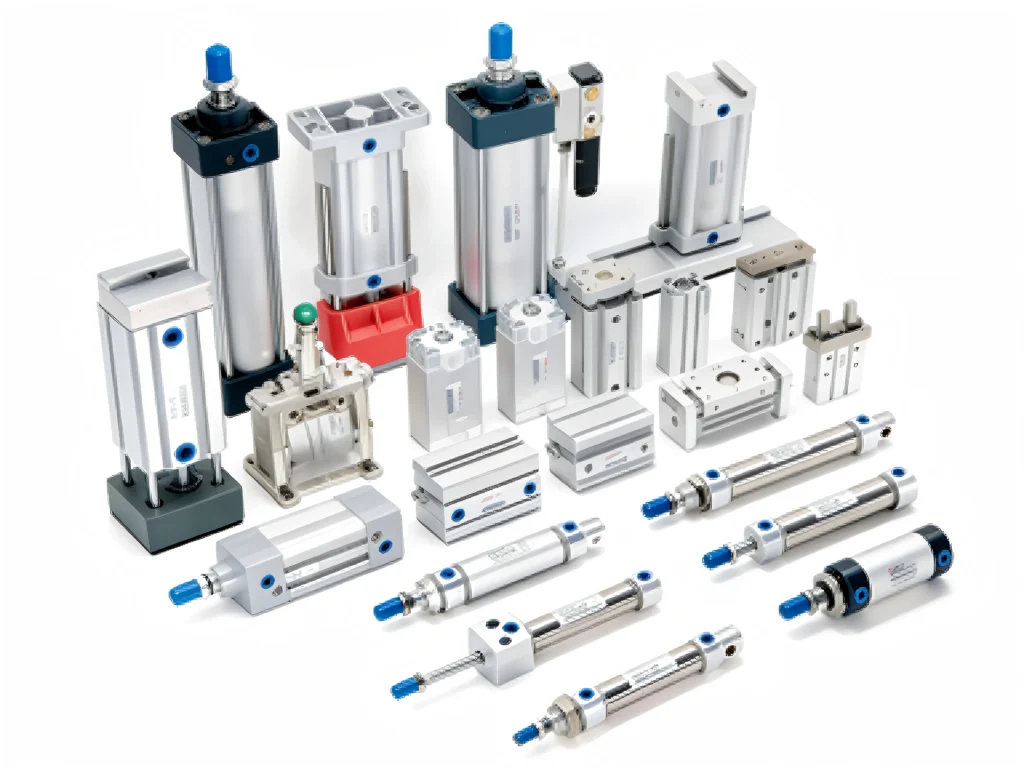
In the field of modern industrial automation, the biggest challenge faced by engineers is often not ‘ how to move objects ‘, but ‘ how to move objects efficiently in a limited space ‘. Although the traditional pneumatic cylinder is mature in technology, its inherent structural defects – the piston rod that must be extended – often occupy double the operating space, resulting in a large volume of equipment.
As a space-saving, flexible stroke and excellent load capacity actuator, rodless cylinder pneumatic has become an essential component in automated production lines, packaging machinery and material handling systems.
Whether you are designing a new high-speed packaging line or looking for a solution to replace old equipment, it is crucial to deeply understand the mechanical principles, classification and advantages of rodless pneumatic cylinders. Anruk Pneumatic has written this detailed guide to take you through this technology.
How Do Rodless Pneumatic Cylinders Work?
To understand the value of the rodless pneumatic cylinder, we must first see how it breaks the limitations of traditional design. The standard cylinder pushes the piston through the air that drive a metal rod out of the cylinder to push and pull the load. This means that if you need a thrust stroke of 1 meter, you need to reserve at least 2 meters of installation space.
The pneumatic rodless cylinder is completely different. It includes the entire itinerary within its own length.
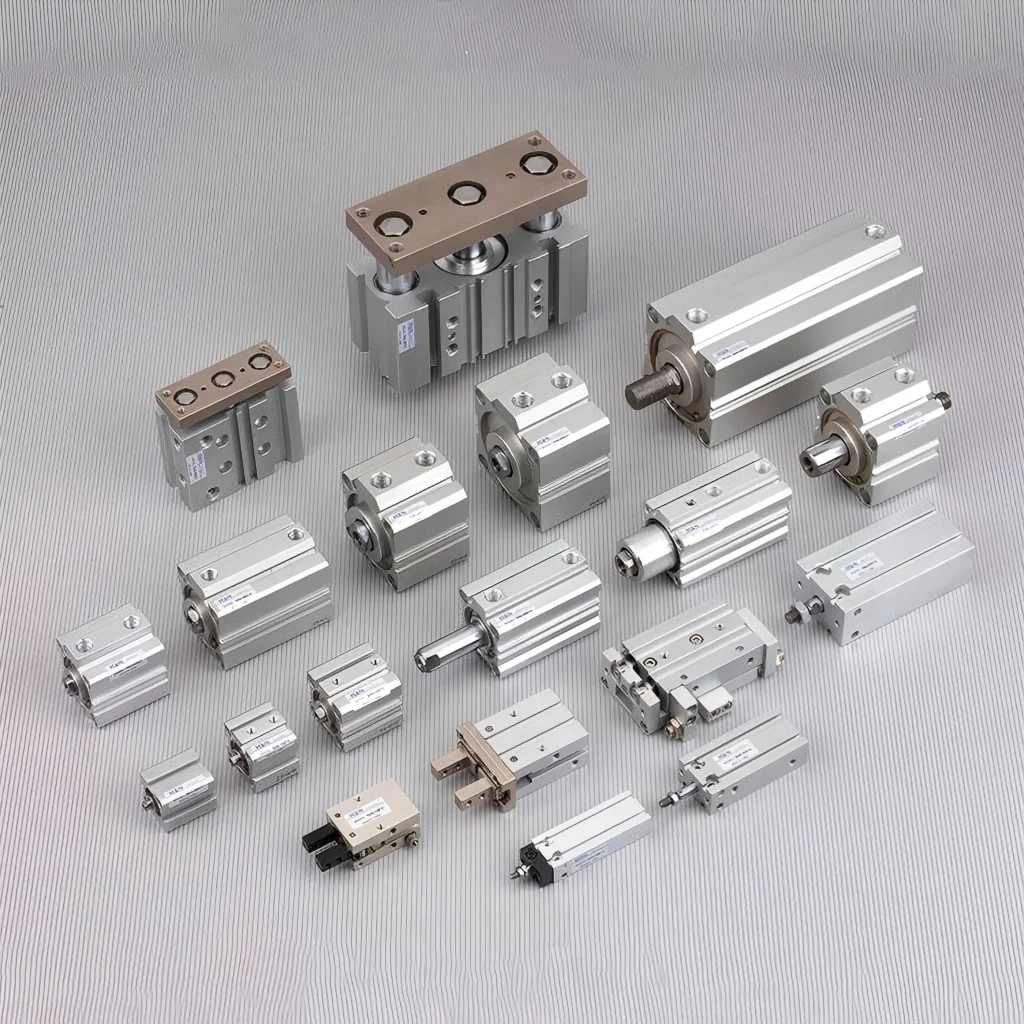
Core mechanism
Internal drive : There is a piston inside the cylinder, which moves back and forth in the cylinder under the drive of compressed air.
External connection : The internal piston is connected to the external slider ( Carriage ) through a certain connection ( magnetic or mechanical, see below ).
Load movement : Your workpiece or tool is mounted directly on this external slider.
This design makes the installation length of the rodless cylinder only a little longer than its actual stroke length, which saves nearly 50 % of the installation space compared with the traditional cylinder.
In addition, most high-quality rodless cylinders have built-in adjustable air cushioning to ensure a smooth deceleration of the piston at the end of the stroke and to avoid impact damage to the equipment.
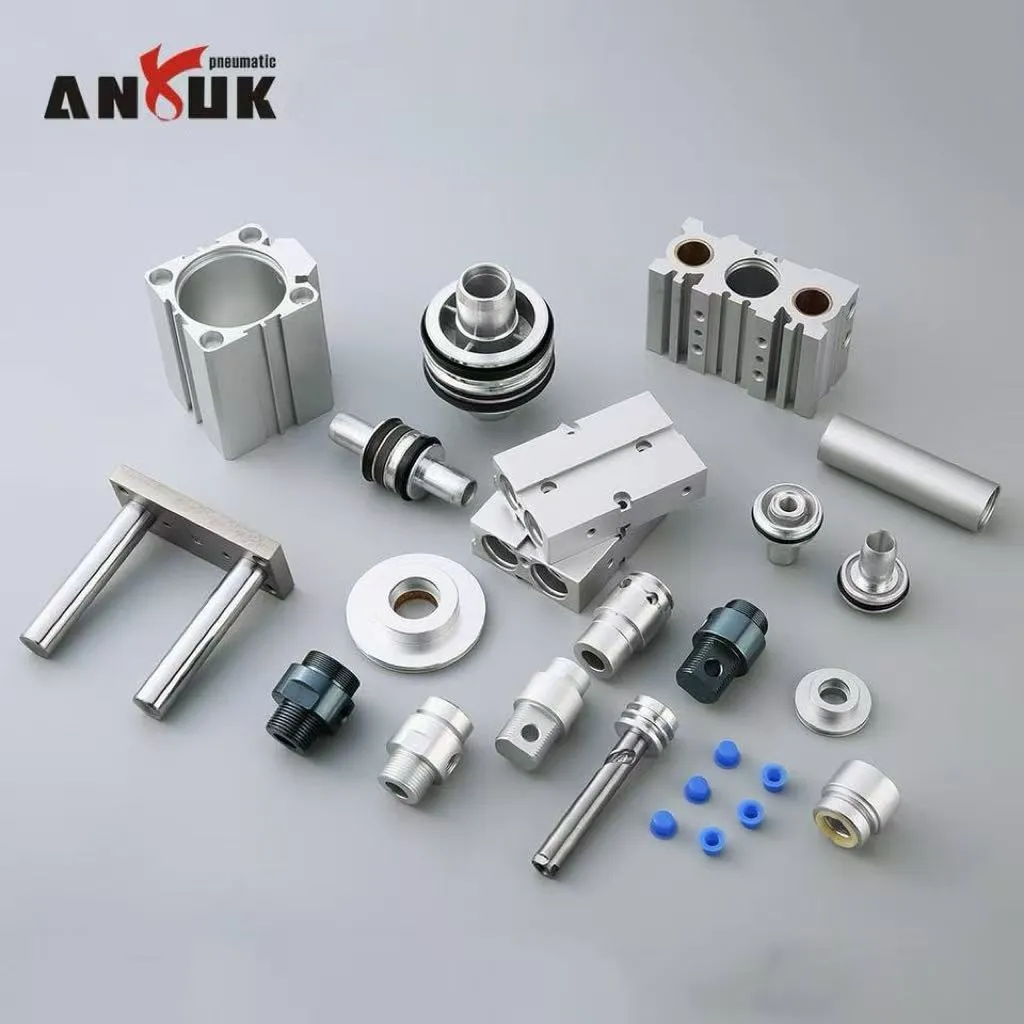
Different Types of Rodless Pneumatic Cylinder
Although there are many different types of rodless pneumatic cylinders, you only need to understand two common categories to select the most suitable pneumatic rodless cylinder for your mechanical equipment. Although they are similar in appearance, their applicable scenarios are very different.
| Feature | Magnetic Coupling RodlessPneumatic Cylinder | Mechanical RodlessPneumatic Cylinder |
| Core Principle | Magnetic field penetration coupling | Mechanical rigid connection |
| Advantages | Zero leakage, clean andstable | High thrust, good rigidity andhigh precision |
| Disadvantages | Low thrust poses a risk ofdecoupling | There is a minor leak. dustprevention maintenance is required |
| Applicable Load | Light and medium load | Medium and heavy loads |
| Applicable Environment | Clean, sterile, vacuum-sealed,leak-proof environment | Typical industrial environment (requires certaindust prevention measures) |
Magnetic Coupling Rodless Pneumatic Cylinder
This is a completely closed design. There is no physical connection between the internal piston and the external slider.
Both the internal piston and the external slider are equipped with a high-strength rare earth magnet array. The strong magnetic force sucks the two together. When the air pressure pushes the internal piston to move, the external slider follows closely.
Because the cylinder has no opening, it is completely sealed. This means that there is no air leakage and no dust or liquid can enter the cylinder.
It is most common in food processing, pharmaceutical equipment and any environment that requires extremely high cleanliness, or in extremely dirty and humid environments.
Mechanical Rodless Pneumatic Cylinder
There is a slender groove along the axial direction of the cylinder barrel. The internal piston is physically connected to the external slider through this groove. In order to solve the sealing problem, two special sealing belts are used in the design : one is located inside the sealing air pressure and the other is located outside to prevent dust from entering.
It can withstand higher loads and faster speeds and will not be decoupled from the overload as the magnetic couple does due to the physical hard connection.
It is most commonly used in automobile manufacturing, heavy material handling, high-speed cutting machines and applications that require large torques.
Rodless Pneumatic Cylinder’s Pros & Cons
As a wise purchaser, it is necessary to objectively weigh the pros and cons before integrating the rodless cylinder pneumatic unit into the system.
Pros
Ultimate space efficiency : It is the only solution when installation space is limited ( e.g. inside the device ).
There is no limit to the stroke : if the stroke of the traditional cylinder is too long, the piston rod is easy to bend or break. The rodless cylinder does not have this problem. In theory, the stroke can be very long.
The two-way force is uniform : the thrust of the ordinary cylinder is different when extending and retracting, because the piston rod occupies the area. The force area on both sides of the rodless cylinder is the same, so the force and speed of the two-way motion are exactly the same.
With its own guiding ability : many mechanical rodless cylinders integrate high-precision guide rails that can directly withstand lateral loads, eliminating the cost of installing additional external guide rails.
Cons
Seal maintenance : mechanical rodless cylinder depends on the sealing belt. After long-term use, the sealing belt may wear and tear that result in a trace of air leakage, which requires regular inspection or replacement of the seal.
Price factor : Due to the complex structure and high precision requirements, the initial purchase cost of the rodless cylinder is usually higher than that of the standard cylinder with the same cylinder diameter.
Low-speed stability : Under extremely low-speed motion, some low-quality rodless cylinders may experience ‘ crawling ‘ phenomena.
Applications of Rodless Pneumatic Cylinders
Automatic Spraying and Screen Printing
In large-format printing or spraying operations, the nozzle or scraper is required to move over a long distance, smoothly and at a uniform speed. The two-way constant speed characteristics of the rodless cylinder make it a perfect choice for such applications.
CNC Machine Tools ( CNC ) Automatic Door
The internal space of the machine tool is small, and the safety door is usually heavy. The rodless cylinder can be installed close to the door frame, and the heavy-duty protective door can be quickly opened and closed without occupying the operating space.
Multi-axis Manipulator and Gantry System
Rodless pneumatic cylinders are often used as simple X-axis or Y-axis modules. Together with the slides, they can construct cost-effective cartesian robots for grasping and placing operations.
Long Distance Material Transmission
When transferring products between two pipelines, it is almost impossible to use a traditional cylinder if the distance is more than 1 meter. The rodless pneumatic cylinder can easily span several meters and push the product from point A to point B.
How to Choose the Right Rodless Pneumatic Cylinders?
Choosing the wrong model not only wastes the budget, but also may lead to downtime. When browsing Anruk Pneumatic ‘s catalogue, please follow the following 4-step selection method :
Determination of load and moment ( Load & Moment )
Don ‘t just look at the weight of the load ( Kg ). For rodless pneumatic cylinders, torque is the killer. If your load center of gravity deviates from the center of the slider, a huge lateral torque will be generated.
- Slight partial load : Standard sliding bearing type can be selected.
- Heavy eccentric load : Please be sure to choose a model with a high-precision linear guide.
Calculate the required thrust and cylinder diameter ( Bore Size )
According to your gas source pressure ( usually 0.5 ~ 0.7 MPa ), select the appropriate cylinder diameter.
Rule of thumb : The theoretical thrust of the cylinder should be 1.5 to 2 times the actual load to ensure smooth operation.
Considering Speed & Cushioning
If the application requires high-speed operation ( more than 500mm / s ), a model with a reinforced air buffer or a hydraulic buffer must be selected to absorb the kinetic energy at the end of the stroke.
Environmental Assessment
Is there cutting fluid and water mist in the environment ? – Preferred magnetic couple.
Is there metal debris and welding slag in the environment ? – Requires the installation of a dust cover or the selection of a special protective mechanical cylinder.
Rodless Pneumatic Cylinder’s Maintenance Tips
Although Anruk ‘s rodless pneumatic cylinders are designed for long life use, this does not mean that they can be ignored. In order to ensure optimum performance :
Keep the air source clean : be sure to install an air filter ( FRL unit ) at the front end to filter out moisture and impurities.
Regularly clean the sealing belt : for mechanical cylinders, regularly wipe the dust on the external sealing belt to prevent particulate matter from embedding and causing air leakage.
Lubrication : Although most modern cylinders are designed for pre-lubrication, an appropriate supplement of ISO VG32 turbine oil can significantly prolong the life of seals under high frequency use.
Ready to Optimize Your Automation System ?
At Anruk Pneumatic, we don ‘t just sell cylinders but also offer space-optimized solutions. Whether you need to replace an existing model or develop new equipment, our team of engineers is always on hand.

What is the Difference Between A Rodless Pneumatic Cylinder and A Cylinder?
The rodless cylinder directly drives the external slider through the magnetic coupling or mechanical structure, which saves the expansion space of the piston rod and makes the structure more compact. The ordinary cylinder relies on the linear reciprocating motion of the piston rod, which requires additional installation space to accommodate the extension length of the piston rod.
Can A Rodless Pneumatic Cylinder Be Actuated with Magnets?
Yes. The magnetic coupling rodless cylinder uses the internal magnetic ring on the piston and the external magnetic ring on the external slider to drive the external load through magnetic coupling. This is one of its most important working methods, but it should be noted that its load and speed capabilities are limited by this structure.
Why Do Rodless Pneumatic Cylinders Fail?
The common causes of rodless cylinder failure include internal and external leakage ( usually caused by seal wear, insufficient lubrication or impurities ) and the unique ‘ off-target ‘ problem of magnetic coupling cylinders ( excessive load or air pressure leads to the separation of internal and external magnetic rings ). In addition, improper installation, unclean gas supply or damage to buffer components may also lead to insufficient output or abnormal operation.
How Do You Calculate Air Cylinder Force?
The force applied in the cylinder is the product of the applied air pressure and the available area of the piston.