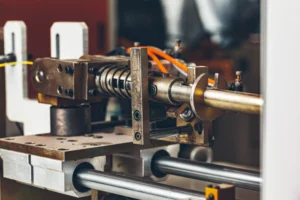
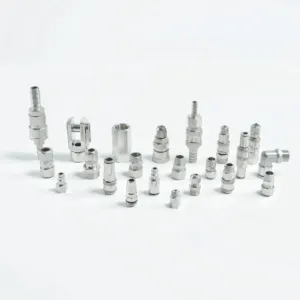
In the field of industrial automation and fluid power, the reliability of the system often depends on its smallest components. Whether you are designing a complex assembly line or maintaining critical mechanical equipment, it is necessary to understand the role of fitting pneumatic.
This guide will give you a comprehensive understanding of pneumatic couplings and help you make informed decisions for your project.
What are Pneumatic Fittings?
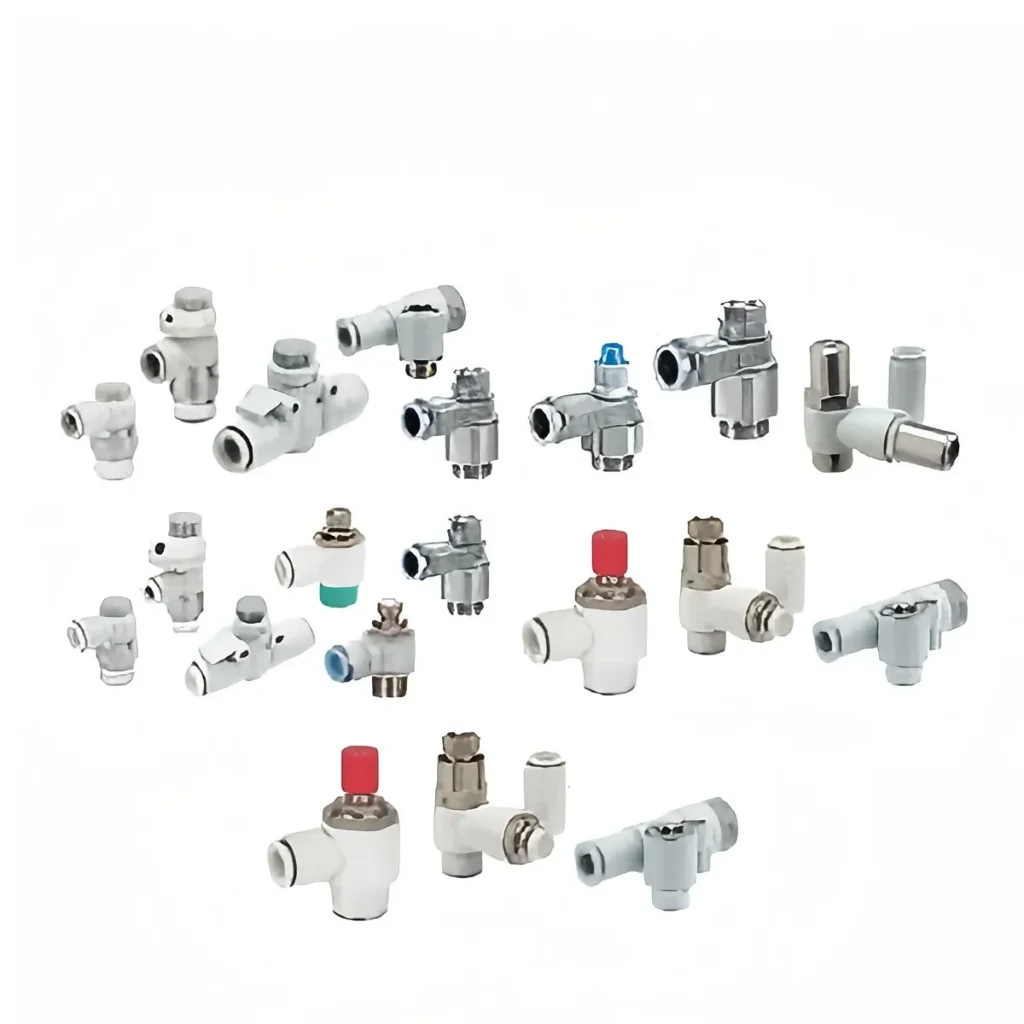
Pneumatic fitting is the basic component of a pneumatic system to ensure the seamless connection between air flow and connection. They provide safe and leak-free connections for pneumatic components such as gas pipes, pipes, valves and cylinders.
Pneumatic fittings facilitate the transfer of air or gas between different parts of the system that ensure normal flow and control. They come in a variety of types, materials and sizes to meet different connection and application requirements.
These systems and accessories are now widely used in a variety of industries and applications from construction, assembly, production lines to a variety of industrial machinery, handheld tools and workbench equipment.
Shop ANRUK Pneumatic Fittings
There are so many pneumatic connectors on the market and choosing the right one can be challenging. This is why we bring you this practical guide.
Explore Our Pneumatic Fittings From ANRIK
ANRUK KQ2 Series Pneumatic Fittings

– Can be operated under vacuum conditions, up to a minimum of-100 kPa
– Provides 51 principal configurations
– Two material options are available on the thread surface : brass ( uncoated ) or brass without nickel plating
– Supports a variety of pipe diameters, including metric round sizes, inch round sizes, metric oval sizes and inch oval sizes
ANRUK KF Series Composite Pneumatic Fittings

-Through structural design, the most suitable materials are used in key parts to obtain comprehensive performance that cannot be achieved by a single material.
-The main body of the joint is often made of engineering plastics, which has low cost and excellent corrosion resistance.
-Thread inserts are usually made of metal, such as brass or stainless steel, which can be repeatedly disassembled and have extremely high thread strength.ANRUK is focused on manufacturing high-quality fittings that meet global standards. If you are looking for a specific specification, size or material type, we invite you to browse our comprehensive pneumatic fitting catalog.
Pneumatic Fittings Types
There are various pneumatic fittings and connectors on the market, and it may be very difficult to find suitable accessories. Read on to learn more about the pneumatic connectors of two common materials and their main characteristics.
| Comparison Items | Plastic Fittings | Brass Fittings |
| Corrosion Resistance | Extremely high | Easily oxidized |
| Weight | Light | Heavy |
| Price | Lower | Middle |
| Pressure Resistance | Suitable for normal pressure | Ultra-high pressure resistance and impact resistance |
| High Temperature Resistance | Generally <90°C | Far higher than plastic |
| Fire Resistance | Most are not flame retardant | Non-flammable |
Plastic Fittings
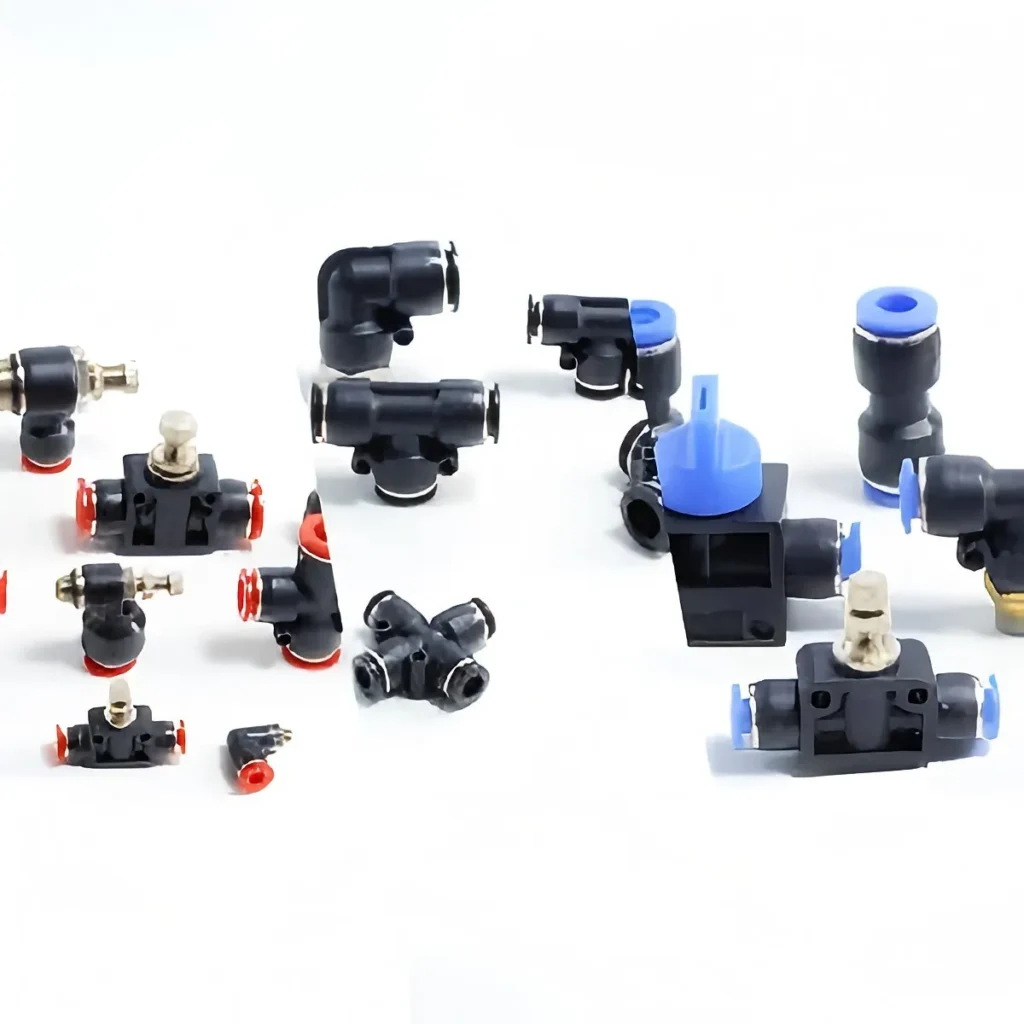
– Excellent corrosion resistance and chemical stability
Engineering plastics have excellent resistance to water, humid air, weak acid and alkali, and chemical solvents.
-The weight is usually only 1 / 3 to 1 / 2 of the same specification brass joint.
- Reduce the overall weight of the system
- Reduce the labor intensity of installation
- Reduce the pipeline stress caused by vibration
-Raw material costs and processing costs are usually lower than metals, which can significantly reduce procurement costs.
– Good insulation
- Electrical safety : avoid short-circuit risk in automation equipment that requires electrical isolation.
- Insulation : to prevent the problem of condensed water due to temperature difference
Brass Fittings
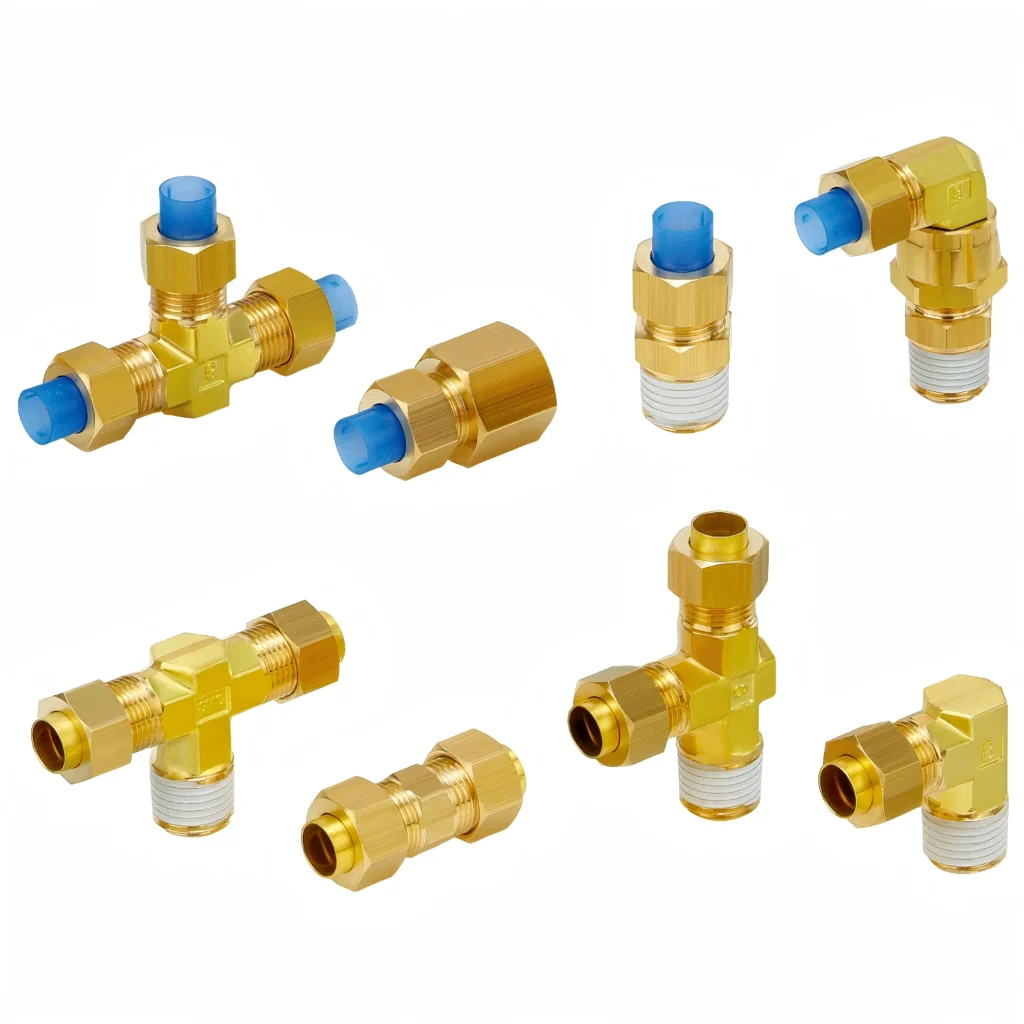
– Excellent mechanical strength and pressure resistance
– Excellent sealing and dimensional stability
-Thread strength and connection reliability
– Good electrical and thermal conductivity
- Conductivity: It can be used in occasions where electrostatic grounding is required to prevent electrostatic accumulation.
- Thermal conductivity : heat dissipation is faster, which is helpful for heat dissipation in the application of high temperature compressed air.
The processing technology of brass pneumatic fittings is extremely mature with high precision, good dimensional consistency and the best interface compatibility with all standard pneumatic components.
Plastic pneumatic fittings are ideal for corrosive environments, lightweight requirements and cost-sensitive applications. Their comprehensive advantages have made them mainstream in modern industry. However, in extreme high temperature, high pressure or physical damage risk situations, metal fittings are still a more reliable choice.
How to Choose the Right Pneumatic Fitting
In the selection of pneumatic fittings, in addition to considering the above common material selection, the specific needs of the pneumatic system should also be considered. Here are some key points to keep in mind :
1. Confirm the type of pipeline and the outer diameter of the pipe.
Hose : PU pipe, rubber pipe → corresponding hose joint ( pagoda / inverted tooth type ) or hose joint with quick plug function.
Hard tube : nylon tube, polyurethane tube → corresponding quick plug joint.
Metal pipe : copper pipe, stainless steel pipe → corresponding sleeve or flared joint.
2. Confirm the working pressure and the use of the environment.
3. Confirm the equipment port thread standard.
Metric thread: such as M5, M10 * 1.0
Inch thread: BSPP (G) – Cylindrical tube thread ; bSPT (R / Rc) -conical pipe thread
American thread: NPT / NPTF-cone pipe thread
Thread mismatch can lead to leakage or even damage the thread.
4. Confirm the required joint function type.
According to the pipeline layout requirements, select:
- Straight fittings: Connect the straight line pipe.
- Elbow fittings: Used to change the direction of airflow in a pneumatic system and available in various angles, typically 90 degrees or 45 degrees.
- Three-way / four-way fittings: shunt or confluence.
- Variable diameter: connect different pipe diameters.
- Pneumatic quick fittings: tool or equipment that requires frequent insertion and extraction.
What Do Pneumatic Fittings Connect to?
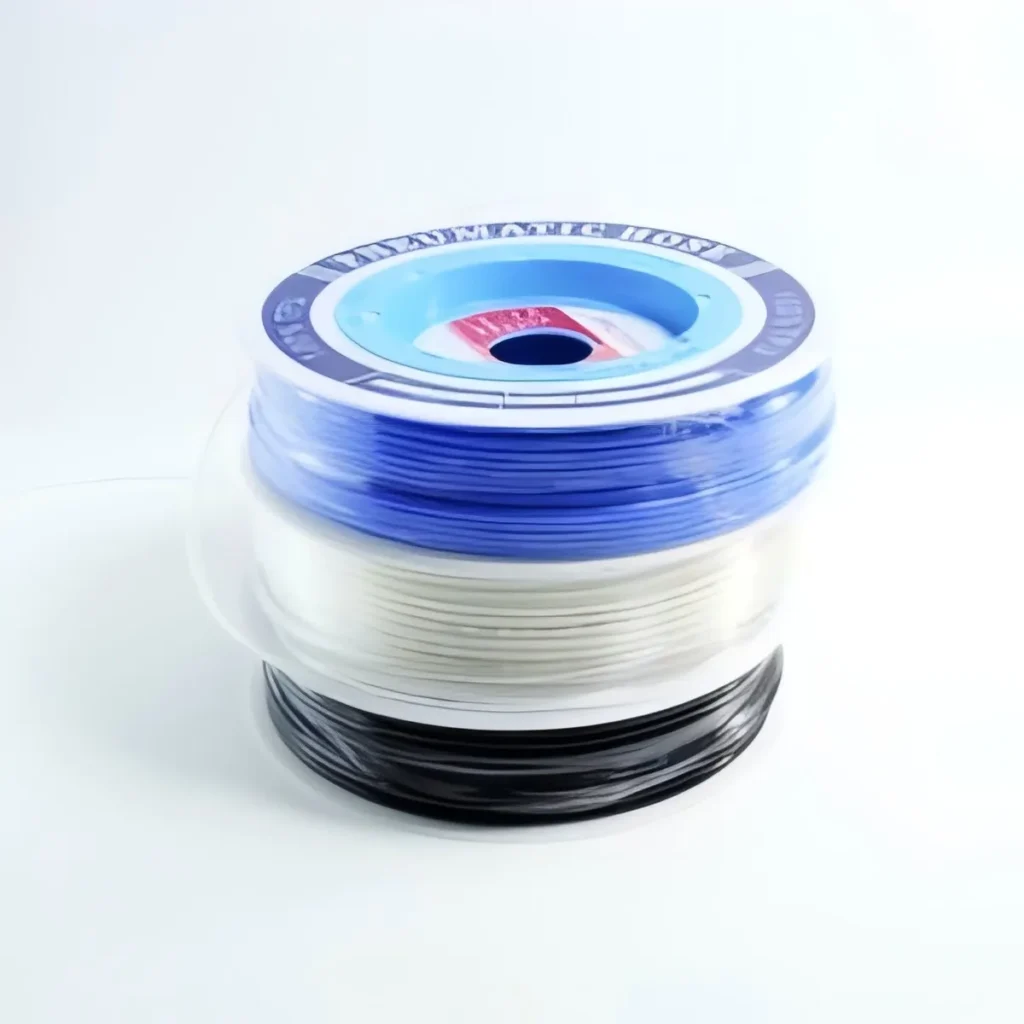
Pneumatic fittings are extremely versatile and can connect various components. One of the most common connections is an air line that allows compressed air or gas to flow smoothly through the system. Whether it’s rigid or flexible tubing, the ANRUK pneumatic fittings can ensure a secure connection and no water leakage.
Pneumatic connectors can also be connected to a variety of pneumatic devices, such as valves, cylinders and actuators. These connections play a key role in controlling the flow, direction and pressure of compressed air, enabling precise and efficient operation.
The coupling can also be connected to dedicated components such as filters, regulators, lubricators and exhaust mufflers. These connections ensure proper filtration, pressure regulation, lubrication and noise reduction, and optimize the performance and service life of the pneumatic system.